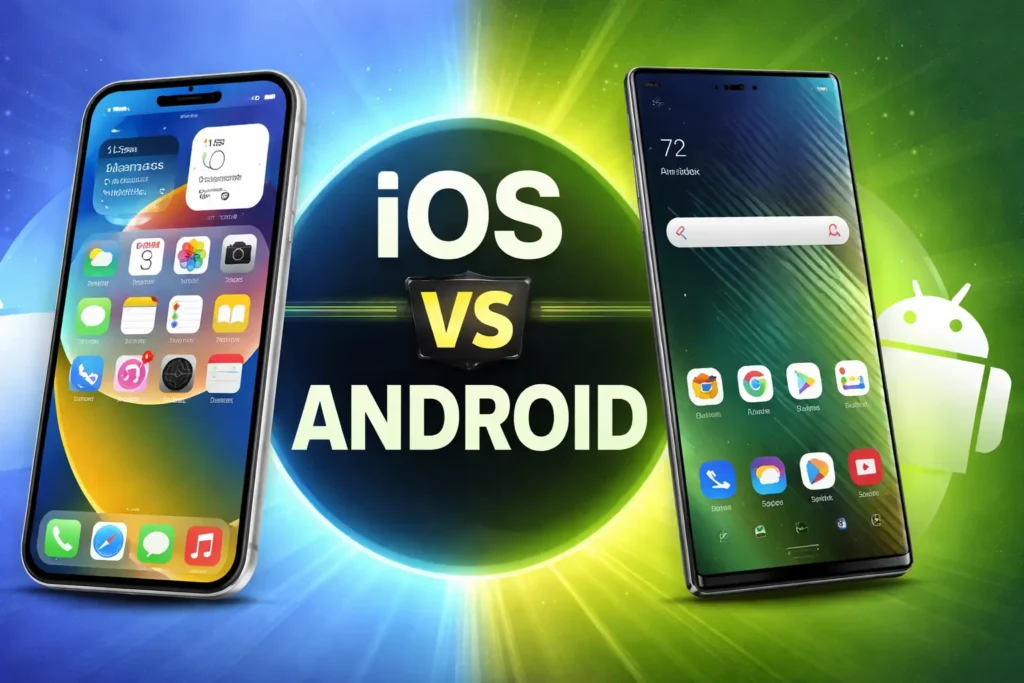
The iOS vs Android debate has been alive for over a decade, yet it remains one of the most searched and discussed topics in technology. The reason is simple: choosing a smartphone today means choosing an entire digital ecosystem, not just a device.
From privacy and software updates to AI features, app quality, battery life, and long-term value, the differences between iOS and Android affect how you work, communicate, create, and live every day.
This guide takes a deep, practical, and unbiased look at iOS and Android, helping you decide which platform truly fits your needs.
What Are iOS and Android?
At their core, both iOS and Android are mobile operating systems designed to run smartphones and tablets. But philosophically, they are built very differently.
iOS in simple terms
- Developed exclusively by Apple
- Runs only on Apple devices like the iPhone
- Designed as a closed, tightly controlled ecosystem
- Focuses on stability, privacy, and long-term support
Android in simple terms
- Developed by Google and based on open-source technology
- Used by dozens of manufacturers worldwide
- Designed as an open and flexible platform
- Focuses on customization, variety, and hardware innovation
This foundational difference shapes everything else you’ll read below.
Market Share and Global Adoption
Android dominates globally, but iOS dominates where spending power is high.
Key observations
- Android holds the majority of global smartphone users, especially in India, Southeast Asia, Africa, and Latin America.
- iOS has a much stronger presence in the United States, Japan, and parts of Western Europe.
- iPhone users, on average, spend more on apps, subscriptions, and digital services.
Why this matters
- For users: Android offers affordability and choice; iOS offers a premium experience.
- For developers and businesses: iOS users generate more revenue despite fewer devices.
User Interface and Everyday Experience
This is where most users form strong opinions.
iOS experience
- Consistent design across all devices
- Smooth animations and predictable behavior
- Minimal learning curve, even for first-time smartphone users
- Strong accessibility features built deeply into the system
Android experience
- Interface varies by manufacturer (Samsung, Pixel, Xiaomi, etc.)
- More freedom to change how the phone looks and behaves
- Advanced controls available for power users
- Can feel overwhelming to beginners on heavily customized devices
In short:
iOS feels polished and familiar. Android feels adaptable and personal.
Customization and Personal Control
Customization is one of the clearest dividing lines.
Android allows you to:
- Change launchers and icon packs
- Fully redesign home screens
- Use advanced widgets and automation
- Modify default apps extensively
- Access deeper system-level settings
iOS allows you to:
- Use widgets and basic home screen personalization
- Customize lock screens
- Change some default apps (browser, email)
- Maintain a clean, controlled interface
Verdict:
If you enjoy tailoring your phone to your personality, Android wins decisively.
If you prefer simplicity without tweaking, iOS delivers that effortlessly.
App Ecosystem and App Quality
Both platforms have millions of apps, but the experience differs.
App quality and consistency
- iOS apps tend to be more polished and consistent in design.
- Android apps vary more due to device diversity and screen sizes.
App distribution differences
- iOS relies mainly on the App Store with strict review guidelines.
- Android supports multiple app stores and direct app installation.
Monetization trends
- iOS users are more comfortable paying for apps and subscriptions.
- Android has a stronger free and ad-supported app culture.
App Ecosystem Comparison Table
| Aspect | iOS | Android |
|---|---|---|
| App quality consistency | High | Variable |
| Paid apps & subscriptions | Strong | Moderate |
| Alternative app stores | No | Yes |
| Sideloading | Very limited | Allowed |
Performance and Hardware Optimization
Performance is not just about raw specifications.
iOS performance strengths
- Apple designs both hardware and software together
- Efficient memory management
- Consistent performance even after years of use
- Excellent thermal optimization
Android performance strengths
- Wide range of processors and configurations
- High-end devices can outperform iPhones in specific tasks
- Gaming-focused phones with advanced cooling exist
Real-world takeaway
- iPhones feel consistently smooth for longer.
- Android performance depends heavily on the specific device and manufacturer.
Software Updates and Longevity
Software support is critical for security and resale value.
iOS updates
- Released simultaneously worldwide
- Supported for 5–6 years or more
- Security patches arrive immediately
- Older devices remain usable longer
Android updates
- Depend on manufacturer and carrier
- Flagships receive faster updates than budget phones
- Security updates may be delayed or inconsistent
- Google Pixel devices are the exception with faster updates
Update Policy Comparison Table
| Factor | iOS | Android |
|---|---|---|
| Update speed | Immediate | OEM-dependent |
| Support lifespan | Long | Varies widely |
| Fragmentation | Very low | High |
Security and Privacy
Both platforms are secure, but their priorities differ.
iOS approach
- Strong app sandboxing
- Strict app review process
- Privacy-focused features and permissions
- Heavy emphasis on on-device processing
Android approach
- Powerful permission system
- More transparency for advanced users
- Higher risk from sideloaded apps if users are careless
- Security depends on device update discipline
Bottom line:
iOS offers stronger default protection.
Android offers greater control if you know how to use it.
AI Features and Smart Assistants
AI is becoming a defining factor.
iOS AI direction
- Focus on on-device intelligence
- Emphasis on privacy and limited data sharing
- AI features feel integrated but conservative
Android AI direction
- Strong integration with Google services
- Advanced voice recognition and contextual awareness
- Heavier reliance on cloud processing
Practical difference
- Android feels smarter in search, voice, and automation.
- iOS feels safer and more controlled with AI usage.
Camera and Multimedia Experience
Camera quality depends on more than megapixels.
iOS camera strengths
- Excellent video recording
- Natural color consistency
- Reliable performance across apps
Android camera strengths
- Rapid innovation in hardware
- Advanced zoom and sensor tech
- More manual controls and experimentation
Battery Life and Charging
Battery experience varies significantly.
iOS
- Highly efficient power management
- Stable battery health over time
- Moderate charging speeds
Android
- Larger batteries available
- Extremely fast wired charging on many models
- Battery performance varies by brand
Device Variety and Pricing
This is where Android clearly dominates.
Android offers
- Budget phones for every price point
- Mid-range phones with premium features
- Foldables and experimental designs
iOS offers
- Premium devices only
- Limited model range
- Strong resale value
Device Range Comparison Table
| Category | iOS | Android |
|---|---|---|
| Budget options | No | Yes |
| Mid-range | Limited | Extensive |
| Foldables | No | Yes |
Ecosystem and Device Integration
Ecosystems lock users in, for better or worse.
iOS ecosystem
- Seamless integration with Mac, iPad, Watch
- Features like AirDrop and Continuity
- Strong but closed ecosystem
Android ecosystem
- Works across many brands
- Better integration with smart home devices
- More flexible but less seamless
Developer and Business Perspective
iOS for developers
- Higher monetization
- Strict guidelines
- Polished tools
Android for developers
- Larger user base
- Flexible distribution
- More testing complexity
Repairability and Sustainability
Longevity matters increasingly.
- iPhones receive longer software support.
- Android repairability varies widely by manufacturer.
- Both ecosystems are improving sustainability efforts.
Pros and Cons Summary
iOS advantages
- Long-term updates
- Strong privacy
- Polished experience
- High app quality
iOS limitations
- Limited customization
- Higher upfront cost
- Closed ecosystem
Android advantages
- Device variety
- Customization freedom
- Faster innovation
- Budget-friendly options
Android limitations
- Fragmentation
- Inconsistent updates
- Variable app quality
Which One Should You Choose?
Choose iOS if you:
- Want long-term stability
- Value privacy and simplicity
- Use other Apple devices
Choose Android if you:
- Want flexibility and customization
- Need affordable options
- Enjoy experimenting with features
Final Verdict: iOS vs Android
There is no absolute winner.
iOS excels in polish, privacy, and longevity.
Android excels in freedom, innovation, and choice.
The best platform is the one that aligns with how you use technology, not how others use it.
Quick FAQs
Which is better, iOS or Android?
Neither is universally better. iOS suits users who value simplicity, privacy, and long-term updates. Android is ideal for users who want customization, choice, and flexibility.
Is iOS more secure than Android?
Yes, in general. iOS offers stronger default security and faster updates. Android is secure too, but safety depends more on the device brand and user behavior.
Which platform gets updates faster?
iOS gets updates first and simultaneously on all supported devices. Android updates vary by manufacturer, except Google Pixel phones, which update faster.
Which is better for privacy?
iOS focuses more on privacy and on-device processing. Android provides strong controls but relies more on cloud-based services.
Is Android better for customization?
Yes. Android allows deep customization, including launchers, icons, widgets, and default apps. iOS offers limited personalization for simplicity.
Which is better for gaming?
Both are excellent. iOS offers smoother performance and better optimization, while Android offers more gaming-focused devices and flexibility.
Which has better cameras?
It depends on the phone. iPhones excel in video and consistency. Android phones often lead in camera hardware and advanced features.
Which platform is cheaper?
Android phones are available at all price points, including budget options. iPhones are premium but offer strong resale value.
Which is better for long-term use?
iOS generally lasts longer due to extended software support. Android longevity depends on the manufacturer.
Which should beginners choose?
Beginners usually find iOS easier to use. Android offers more control but can feel complex at first.